France holds a special place on the freight transport map. One of Europe’s largest economies, a dense motorway network, heavy cargo flows between Britain, the Iberian Peninsula and Central Europe – operators working in this market know that an unplanned stop comes at a high cost. That is why TRELO has been steadily building its repair centre network where transport flows are most concentrated. After Paris, Lyon and Metz – the fourth step: from August 10, 2026, TRELO opens a repair centre in Tours.

Why Tours?
Tours is not an arbitrary choice. The city sits at the intersection of three major transport arteries: the A10, A85 and A28 motorways. The A10 connects Paris with Bordeaux and Spain, the A28 runs north towards Normandy and the Channel ports, and the A85 leads west into Brittany and the Atlantic regions. In short, it is one of the most strategically significant points in central France for operators whose routes cross the heart of the country.

Until now, the nearest TRELO centre along this corridor was Paris or Lyon – both too far when a vehicle breaks down on the road. Tours fills that gap.

What you will find at the new service centre?
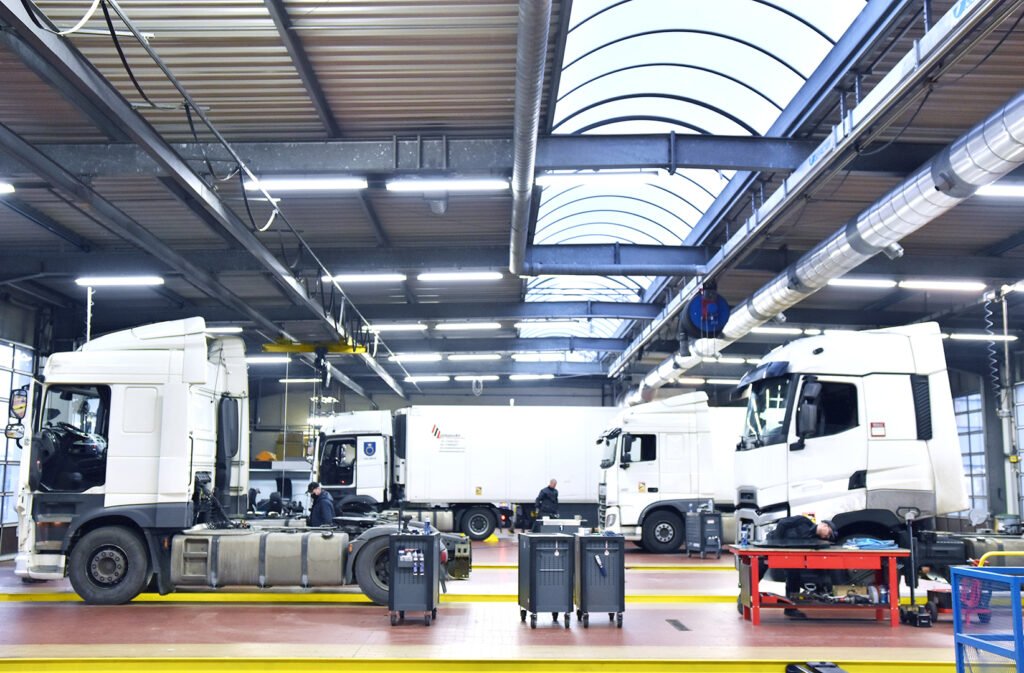
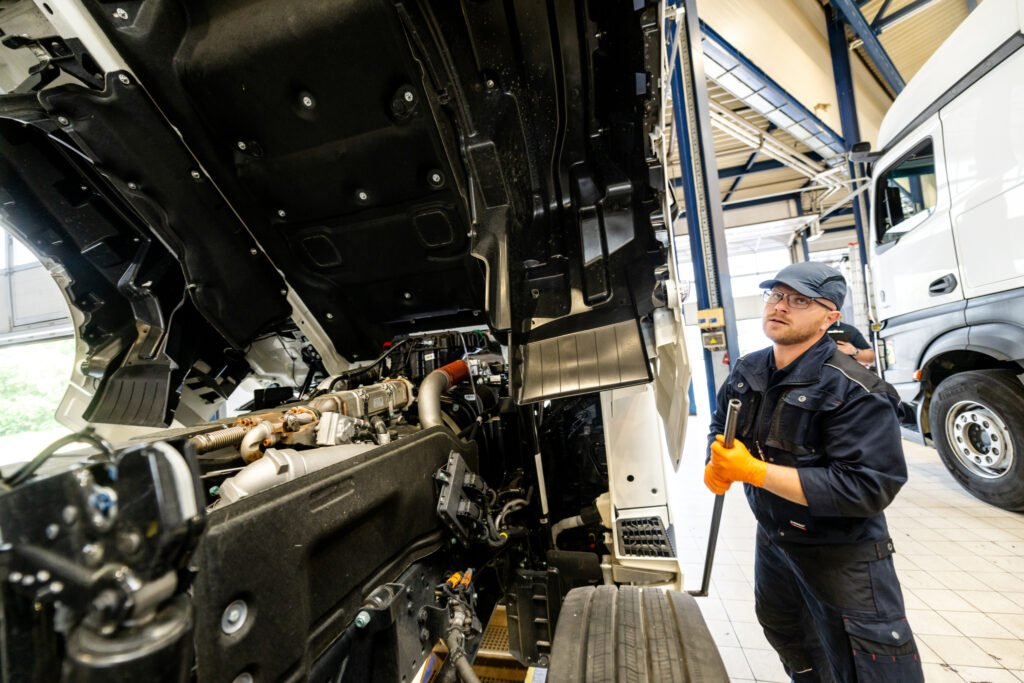
The new repair centre has 7 service bays and a parking lof for up to 10 vehicles. The range of services covers everything that may be needed on the road or during scheduled maintenance:

  • Technical inspections and preventive servicing.
  • Engine and transmission repairs.
  • Electrical and electronic systems.
  • Tyre replacement and repair.
  • Semi-trailer repair and maintenance.
  • All major component repairs.

The service centre will be open from August 10th, Monday–Friday 7:00–19:00 and Saturday 7:00–16:00.

The same TRELO standard – in a new location

Those who already work with TRELO know what to expect: a professional team, fast response to breakdowns, clear communication on work and timelines. At Tours – exactly the same.

If you operate routes through central or western France – the new centre is ready for you from August 10.

📍 8 Rue Champmesle, La Ville-aux-Dames, France
More information – coming soon!

Across different European markets, transport companies’ expectations of service providers can vary significantly. What is considered a standard service in one country may be perceived as added value in another.

As a result, the commercial vehicle repair industry is increasingly discussing not only technical expertise and operational processes, but also the ability to understand the expectations of customers from different markets.

The European Transport Customer: No One-Size-Fits-All Model

The transport sector is often viewed as a single market, but in reality, it consists of businesses operating under different models and with different priorities. Some companies work under long-term contracts and strict schedules, while others handle smaller volumes, make decisions more quickly, and often focus more heavily on cost considerations.

These differences directly shape the relationship companies have with service providers. For some, stability and predictability are paramount; for others, flexibility and the ability to react immediately are more important.

According to Rasa Augaitienė, Regional Sales Manager at truck and trailer service network TRELO, there is no universal customer profile in the transport sector, and a client’s business model often determines their expectations.

“There is still a common assumption in the transport industry that all customers want the same thing – fast, high-quality repairs. While that is true to some extent, it is only part of the picture. In practice, we see that customer expectations can vary considerably from one market to another, and these differences are largely driven by the way the customer operates. For some, stability is the key priority; for others, speed or adaptability matters most.”

Different Priorities: What Matters Most to Customers?

In the transport industry, discussions often revolve around three main factors: price, speed, and quality. In reality, however, these factors are rarely equally important, and the balance between them can differ dramatically from one market to another.

In Western European markets, customers tend to value stability and predictability more than sheer speed. Their primary expectation is that everything happens according to plan: deadlines are met, processes are clear, and outcomes are reliable.

In other markets, there is often a stronger need for immediate responsiveness, where decisions must be made quickly and flexibility becomes more important than strict adherence to a predefined process. Elsewhere, cost control may play a much greater role, particularly for transport companies operating with lower margins or fluctuating workloads.

“In Western Europe, customers place great importance on things happening exactly as agreed. In these markets, a ‘fast service’ is often understood not as working faster, but as delivering according to plan without surprises or deviations. In other markets, we more frequently encounter situations where rapid adaptation and immediate problem-solving are required.”

This also changes how service quality is perceived. The same solution may be regarded as a basic expectation in one market, while representing a significant competitive advantage in another.

Different Markets, Different Standards and Expectations

Differences between markets are shaped not only by economic factors but also by varying business cultures and ways of working.

Research into B2B customer behaviour shows that today, price and technical quality are no longer the only deciding factors. More than two-thirds of European business customers say that supplier reliability, responsiveness, and the ability to deliver on commitments play a crucial role in their purchasing decisions.

In the transport sector, these considerations become even more important. Every decision has a direct financial impact, as every hour of vehicle downtime translates into tangible losses.

“In some markets, customers take it for granted that they will receive real-time updates about repair progress, timelines, and costs. In other markets, this level of transparency is still not considered standard practice, which means it becomes an additional value proposition.”

According to Augaitienė, differences are also reflected in customers’ attitudes toward planning.

“In some markets, preventive maintenance and adherence to schedules are standard practice, while in others a more reactive approach still dominates. This affects not only how work is organised, but also what customers expect from their service providers.”

These differences mean that the same service model will not necessarily succeed equally well in every market.

“If you offer exactly the same model to every customer, in reality you do not truly understand any of them. Every market has its own specifics, which means service providers must be able to adapt their processes, communication style, and response times accordingly.”

Expectations Are Changing: The Growing Demand for Transparency

Despite the differences between markets, some trends are becoming increasingly universal. One of the most notable is the growing demand for clarity and transparency.

Transport companies increasingly want not only a quick solution, but also a clear understanding of what is happening with their vehicles. When will the repair be completed? How much will it cost? What decisions are being made? These questions are becoming just as important as the repair itself.

“Customers increasingly expect not only repairs, but also clear information. They want to know what is happening, how long it will take, and why certain decisions are being made. Transparency is becoming just as important as the repair work itself.”

This demonstrates how the role of a service provider is evolving. It is no longer simply a repair partner, but also an information and decision-making partner.

Service Providers as Partners, Not Just Vendors

Today, competitive advantage in the transport sector is created not only through technical quality or speed, but through the ability to truly understand the customer.

Different markets, business models, and priorities mean there is no universal solution. The value of a service provider is increasingly measured not only by the quality of the work performed, but also by how effectively it responds to the specific needs of each customer.

“Today, customers care not only whether the repair was completed, but also how it was completed – whether deadlines were met, whether information was provided on time, and whether decisions were communicated clearly. All of these factors form part of the overall customer experience.”

For this reason, the winners in the commercial vehicle repair industry are those service providers that adapt to their customers, rather than expecting customers to adapt to them.

Europe’s economy relies heavily on road transport. Goods move constantly between factories, warehouses, and retail centers, while trucks serve as the bloodstream of this entire system. According to Eurostat, road transport accounts for roughly a quarter of all freight transport within the European Union, carrying more than 13 billion tonnes of cargo every year.

This means that every part of the logistics chain — from the truck itself to the repair center — has a direct impact on how the broader economy functions. When a vehicle breaks down, the chain is disrupted: deliveries are delayed, manufacturing processes slow down, and transport companies face immediate financial losses.

For this reason, commercial vehicle maintenance is no longer viewed merely as a technical process. Today, it is increasingly seen as an essential part of business infrastructure.

Downtime Costs More Than the Repair Itself

In Lithuania, salaries for commercial vehicle mechanics have increased significantly in recent years. In the logistics industry, one of the most important indicators is vehicle uptime — the amount of time a truck spends on the road rather than in the workshop. Every day of downtime can mean lost revenue, additional driver-related costs, or even contractual penalties for delayed deliveries.

According to various transport industry studies, the downtime of a single truck in Europe can cost anywhere from several hundred to more than a thousand euros per day, depending on the route, cargo value, and contractual obligations involved. As a result, repair speed has become just as important as the repair cost itself.

For transport companies, the key question is no longer only how much the repair will cost, but also how long the vehicle will remain out of operation. The shorter the downtime, the lower the losses and the more stable the entire logistics chain becomes.

Repair Speed Starts in the Warehouse

At first glance, it may seem that a repair center’s efficiency depends mainly on the number of mechanics or the size of the workshop. In practice, however, one of the most critical factors is often located elsewhere — in the warehouse.

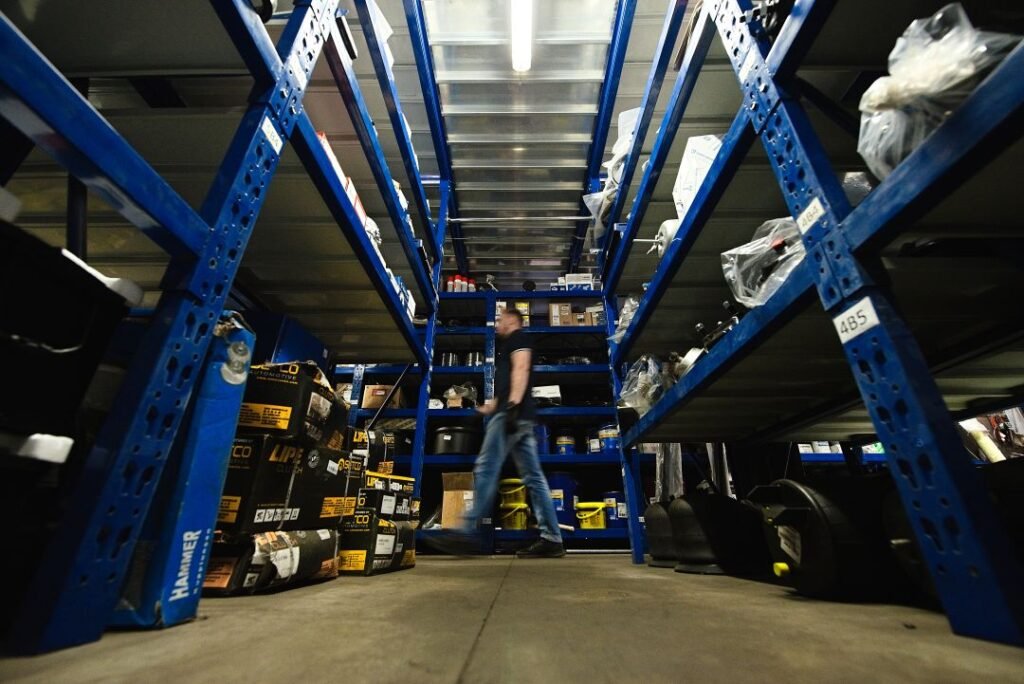
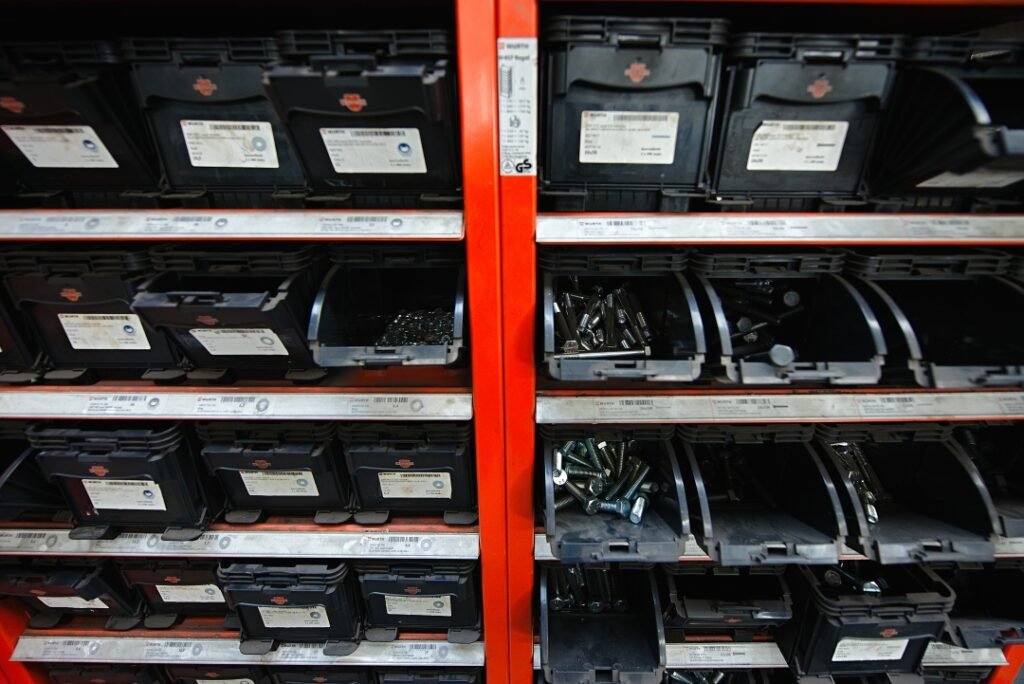
If the necessary spare parts are already in stock, repairs can begin immediately. If not, the vehicle may remain idle for several days or even a week while parts are delivered from suppliers.

According to Karolis Giga, Purchasing and Logistics Director at the truck repair network UAB “Trelo”, a repair center’s efficiency depends heavily on process quality and inventory management.

“A repair center without clear processes and a properly structured warehouse is essentially just a workshop capable of carrying out repairs — nothing more. Repair speed primarily depends on whether the required parts are available on-site,” he says.

According to Giga, inventory planning and supply chain management are often the deciding factors in whether a repair takes only a few hours or stretches into several days.

Data Makes It Possible to Predict Failures

In recent years, commercial vehicle maintenance has become increasingly data-driven. Repair centers analyze historical breakdown data, vehicle models, seasonal trends, and statistics on frequently replaced components. This information helps predict which parts will likely be needed in the near future and ensures their availability in advance.

Giga explains that inventory planning relies on several interconnected sources of information.

“We evaluate historical failure statistics and spare part consumption, analyze vehicle fleets — including models, engine types, age, and operating intensity. Seasonality, delivery lead times, and current warehouse stock levels are also important. By combining this data, we can forecast demand more accurately and reduce shortages,” he says.

Repair center teams themselves also play an important role in the process. If a certain part is needed but unavailable at the time of repair, the information is recorded in internal systems and passed on to the purchasing team. This allows the company to react quickly and continuously improve warehouse structure and inventory planning.

Inventory planning also varies by region. According to Giga, the demand for specific parts can differ significantly between repair centers.

“In some regions, for example, Mercedes-Benz trucks dominate, while in others Volvo or other manufacturers are more common. Naturally, this changes the list of frequently used parts. If every warehouse looked identical, it would mean nobody is paying attention to the actual market — and inventory simply becomes expensive decoration sitting on shelves,” he says.

83% of Repairs Are Completed Using Parts Already in Stock

A properly structured warehouse and data-based decision-making can significantly reduce repair times. When the required parts are already available on-site, most repairs can be completed immediately.

According to Trelo’s internal data, approximately 83% of all repair jobs across its repair centers are completed as soon as the issue is diagnosed, using parts already available in stock without the need for additional supplier orders.

Giga says this result is not a coincidence, but the outcome of consistently developed operational processes.

“This is not luck or coincidence. It is the result of processes, inventory planning, and data analysis. When a warehouse is built based on real repair data, a large share of repairs can be completed immediately,” he explains.

He adds:

“In simple terms, people often assume repairs are delayed because of the mechanic. In reality, in many cases everything depends on whether the part is available in the warehouse. When inventory is planned correctly, this kind of result becomes quite logical.”

This approach allows transport companies to return vehicles to the road faster and reduce the financial impact of downtime.

Supply Chain Management Is Becoming a Competitive Advantage

In recent years, the importance of supply chains has become even more evident. The COVID-19 pandemic, geopolitical disruptions, and instability in global logistics demonstrated just how unpredictable automotive parts supply can become.

Parts that previously arrived within a few days suddenly faced delays of weeks or even months during the pandemic. As a result, many repair center networks were forced to reassess their inventory management strategies.

“For a long time, road transport repair centers relied heavily on the just-in-time model — ordering a part only when it becomes necessary. However, in the commercial vehicle segment, this model often no longer works. When a truck stops, the carrier’s main concern is not the breakdown itself, but how long they are unable to fulfill obligations to their client. In such situations, waiting several days is simply not an option. That is why warehouse strategy has become one of the key factors determining service efficiency,” says Giga.

According to him, companies today also place greater emphasis on supply risk management by increasing stock levels of critical parts and expanding networks of alternative suppliers. This helps ensure part availability even when one supply channel becomes disrupted.

These challenges have pushed repair networks toward a more proactive inventory planning model, where warehouse structures are built based on historical repair data, forecasting, and supply risk evaluation.

Fast Repairs Support the Stability of the Entire Logistics Chain

Everything in the transport sector is interconnected. The downtime of a single truck can affect not only the transport company itself, but also customers, warehouses, and manufacturing businesses.

For this reason, service efficiency is no longer just a technical issue — it has become an economic factor within the transport industry.

The faster a vehicle returns to the road, the lower the downtime-related losses and the more stable the entire logistics system becomes.

As a result, one simple principle is becoming increasingly clear in the truck repair industry: fast repairs do not begin in the workshop — they begin in the warehouse.


The commercial transport sector in Lithuania and across Europe has been living in a paradox for some time. On the one hand, it is a stable and strategically important segment of the economy, with demand that is not going anywhere. On the other hand, a shortage of qualified specialists is becoming increasingly evident in the labour market, turning into one of the main constraints on growth.

Logistics and road transport remain among the most critical elements of Europe’s supply chains. The growth of e-commerce, regional trade, and the dynamics of the manufacturing sector mean that truck fleets are not shrinking — on the contrary, they are modernising and expanding. As a result, the need for maintenance and repair services is also increasing.

Wages Are Rising, but the Shortage Remains

In Lithuania, salaries for commercial vehicle mechanics have increased significantly in recent years. Depending on experience and competencies, truck mechanics can earn approximately €1,200 to €2,500 net per month, while highly skilled specialists can earn even more. Auto electricians working with advanced diagnostic systems and complex electronics often command even higher pay ranges.

In Western Europe, the differences are even more pronounced. In Germany or Scandinavian countries, annual salaries for truck mechanics can reach €45,000–€60,000 gross, while shortage occupations are often offered relocation packages, accommodation, or travel compensation.

However, as Paulius Stravinskas, Head of HR and Communications at the truck repair network TRELO, notes, salary is no longer the only competitive factor.

“The issue today is often not how much to pay, but whom to pay. The market lacks qualified mechanics and auto electricians — especially those who can work with next-generation vehicles and their electronic systems.”

According to him, a portion of experienced specialists is approaching retirement age, while the number of young people choosing these professions is not yet sufficient to compensate for the natural outflow from the market.

Demographics and Vocational Training Challenges

Eurostat data shows that a large share of the EU transport workforce is older: around 37.7% of employees are aged 50–64, while only about 12.7% are younger workers. This means that a significant part of the workforce will retire in the coming years. Although engineering and transport maintenance professions are among those with long-term demand, attracting young specialists remains one of the biggest challenges.

According to P. Stravinskas, this is directly reflected in recruitment efforts:

“Young people often do not choose technical professions — which means companies are competing not only on salaries, but also for the limited number of qualified specialists in the market.”

In Lithuania, the situation is further complicated by emigration. Highly qualified mechanics and auto electricians are mobile — they can relatively easily find jobs in Western Europe, where compensation is higher. This means local companies must compete not only with each other, but also with employers abroad.

At the same time, commercial vehicle maintenance is becoming increasingly complex. Hybrid systems, advanced safety technologies, telematics, and diagnostic software require not only mechanical skills but also analytical capabilities. Vocational training systems are struggling to keep pace with the speed of technological change demanded by the market.

The Profession Is Transforming: From Tools to Diagnostics

A modern truck is no longer just a set of mechanical components — it is a complex system of electronics, sensors, and software. This is fundamentally changing the nature of the profession.

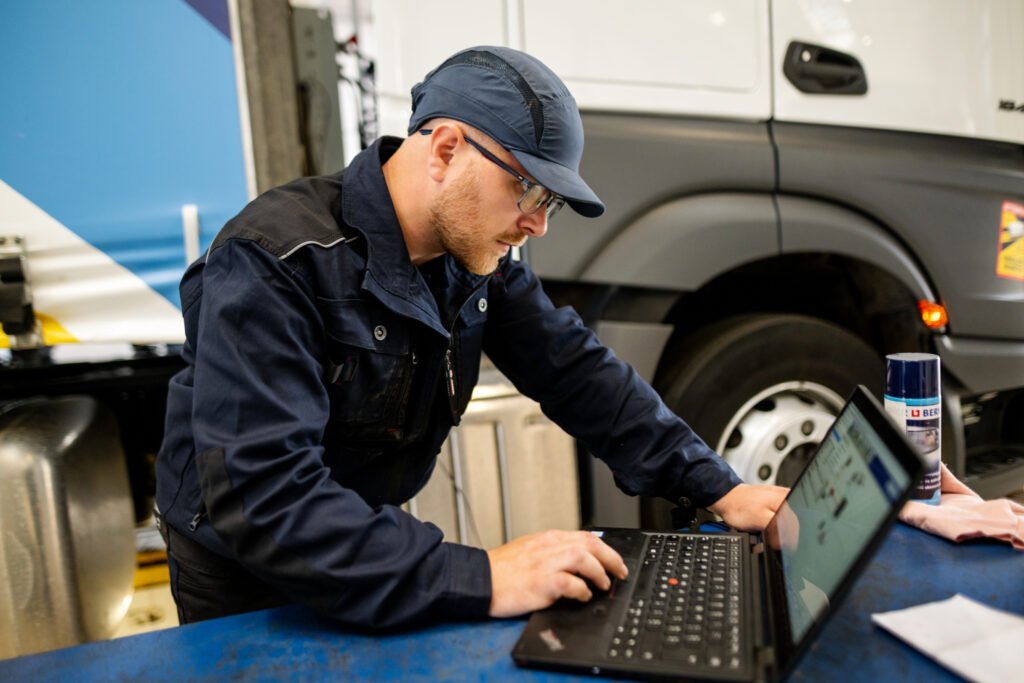
“Today, a mechanic is increasingly working with a computer in hand. Diagnostics, software updates, and electronic fault analysis are becoming everyday tasks. We are no longer talking only about physical work, but also about analytical thinking,” emphasises P. Stravinskas.

The role of auto electricians is becoming even more critical in this transformation. The growing importance of telematics, safety systems, and driver assistance technologies means that without highly qualified specialists, operating truck fleets becomes more complex and costly.

Minor mistakes that turn into real problems

Discussions about the future often raise the topic of automation. Autonomous trucks, remote diagnostics, and AI-driven maintenance algorithms are no longer just theoretical concepts.

However, in practice, automation is changing the nature of work rather than eliminating the profession.

“Automation may reduce some routine tasks, but it raises the qualification bar. We need people who understand systems, can analyse data, and make decisions. The more complex the technology, the greater the value of competent specialists,” says P. Stravinskas.

Even the most advanced vehicles still require physical maintenance, component replacement, fault analysis, and system calibration. As the share of electronics in trucks continues to grow, the importance of auto electricians is only increasing.

This means that in the future, those who will remain competitive are the specialists who continuously learn and adapt to technological change.

Long-Term Outlook: Growth Under Pressure

Looking at the broader European context, the commercial transport sector continues to grow. The expansion of e-commerce, regional trade, geopolitical shifts, and the reorganisation of supply chains ensure that road transport will remain one of the key logistics segments in the coming years.

This means that demand for mechanics and auto electricians will not decrease. On the contrary, as fleets become more complex and technologically advanced, the importance of qualified specialists will only grow.

The labour market in this field is becoming increasingly clear: this is not a declining profession, but an increasingly complex one. And the higher the technological bar, the greater the value of human competence. Those who can adapt to technological change will not only have stable employment, but also real opportunities to earn competitive salaries both in Lithuania and across Europe.